UAE Plastic Packaging Guide: How to Fix Blown Film Machine Film Blocking
Operating a high-performance blown film machine in the UAE or Gulf region requires strict thermal management, especially when summer temperatures in Dubai or Sharjah prevent extruded materials from cooling down properly. Among all production defects, film blocking—where the two layers of the collapsed plastic tube stick together and become nearly impossible to open—is a highly disruptive issue for Middle Eastern factories. When your film blocks, it ruins downstream high-speed bag making and automatic printing operations. To help you eliminate this costly defect, let us look directly at how to fix film blocking by optimizing your winding tension, cooling parameters, and additive dosing step-by-step.
Step-by-Step Guide: How to Fix Film Blocking and Opening Issues Instantly
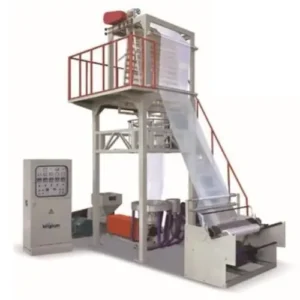
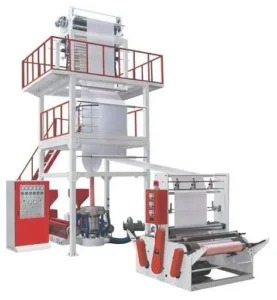
To fix film blocking caused by improper thermal management on your blown film machine, your very first action must be reducing the temperature of the film before it reaches the nip rolls. You can fix this by increasing your chiller water flow rate and boosting the secondary cooling air velocity to ensure the melt crystallizes fully and drops below its tackiness threshold before collapsing, because wrapping warm film onto a tight roll traps latent heat and fuses the layers together on your blown film extrusion machine. Next, lower the temperature settings of your final barrel zones and die head by 5°C to 10°C to reduce the initial melt temperature, which immediately lowers the residual heat load carried by the plastic bubble.
To fix blocking issues caused by mechanical stress during the rewinding process, you must optimize your winding tension profile immediately. You can fix this by switching your winder from constant tension mode to a tapered tension control program, which automatically decreases the winding force as the roll diameter grows, preventing the outer layers from squeezing the inner layers together. Additionally, realign and recalibrate the nip roll pressure settings on your tower to ensure uniform clamping across the entire layout, because any localized high-pressure zone will cause severe material compression and trigger immediate blocking on your co-extrusion blown film machine.
To fix chemical-level blocking caused by inadequate surface lubrication, you must adjust your masterbatch recipe and polymer blend ratios. Fix this by increasing the dosage of your anti-blocking agent and slip masterbatch by 0.5% to 1% progressively inside your dosing system to create a microscopic surface roughness that prevents smooth polymer faces from vacuum-bonding. If you are running high-density material structures on a multi-layer line, make sure to concentrate the slip and anti-blocking additives into the outermost skin layers to achieve maximum efficiency without compromising the core layer mechanical properties of your co-extrusion blown film machine.
Process Troubleshooting Matrix for Film Blocking
Use this quick-action reference guide to apply direct mechanical and chemical remedies to your factory floor.
| Blown Film Machine Blocking Defect |
Direct Fixes & Process Remedies |
Immediate Operational Action |
| Severe Roll Fusion / Total Bonding |
Increase cooling air volume, lower chiller temperature, and slow down line speed. |
Drop melt temperature and maximize bubble cooling efficiency before the nip roll. |
| Hard-to-Open Film (Poor Opening) |
Increase anti-blocking masterbatch and slip additive dosage in the skin layers. |
Adjust the dosing system ratios to introduce high-grade silica or amide additives. |
| Core-to-Outside Roll Tightness |
Activate tapered tension control and reduce the initial winding tension setpoint. |
Modify the winder tension curve to prevent compression as roll diameter grows. |
| Localized / Strip-Like Blocking |
Calibrate the nip roll pressure balance and eliminate uneven tower frame alignment. |
Check nip roll pneumatics and adjust pressure valves for uniform surface contact. |
Pro-Tips for Maintaining Smooth Film Opening
To ensure long-term roll quality on your blown film extrusion machine, implement a strict storage and curing routine inside your warehouse during peak summer months. Keep all finished film rolls stored horizontally on proper racks inside a temperature-controlled environment away from direct sunlight, because hot warehouse storage can trigger post-winder blocking even weeks after a successful production run.
You can also eliminate manual dosing errors completely by upgrading to an automated gravimetric dosing system directly integrated into your line control. This technology upgrade monitors additive consumption in real-time and maintains a flawless, uninterrupted distribution of anti-blocking agents, locking in smooth opening properties on your co-extrusion blown film machine despite any shifting ambient factory temperatures.
Upgrade Your Factory with a High-Performance Blown Film Machine
We engineer every single blown film machine specifically to handle extreme tropical and desert operating environments without sacrificing film surface quality or optical clarity. Our advanced air ring cooling dynamics, precision tapered tension winders, and integrated multi-component dosing setups ensure that your blown film extrusion machine delivers perfectly wound, non-blocking film rolls even when the outside temperature hits 50°C.
If you want to eliminate film blocking, lower your scrap rate, and invest in a reliable co-extrusion blown film machine built for the Middle East market, please contact our technical engineering team today for a custom machinery consultation.