How to Fix Black Spots & Crystal Gels on Your Bubble Wrap Machine Film
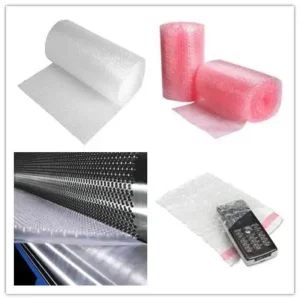
For packaging manufacturers in the industrial zones of Al Quoz, Mussafah, or Sharjah, film clarity and structural strength are the benchmarks of product quality. A recurring problem is the sudden appearance of black spots, brown streaks, or hard crystal gels on the film. When a high-speed bubble wrap machine starts putting out film with these defects, the aesthetic value drops — and, more importantly, the bubbles are far more likely to pop under pressure during transit.
Many supervisors assume the impurities are entirely a bad batch of LLDPE or LDPE. Resin purity matters, but the heat of the Gulf region accelerates polymer degradation inside the extrusion system on its own. This guide explains why the machine generates black spots and crystal gels, and the maintenance steps your factory team can take to clear the film.
The Thermal Breakdown: Why Middle East Extrusion Lines Suffer More Carbon Build-up
A line running in high ambient temperatures takes a lot of thermal stress. When the molten plastic sits in the heating zones too long, or the temperature profile is mismanaged, the polymer chains crack and oxidize into stubborn carbonized crust along the metal walls.
The main source of black spots is dead zones in the die head or adapter plate. With a traditional T-die that has not been polished or streamlined, small amounts of molten resin get trapped in corners. Under continuous heat above 200°C, that trapped plastic degrades into hard black carbon. Eventually the flowing melt shears the carbon off the wall and carries it onto the forming roller, ruining the film.
The second culprit is unmelts or fish eyes — the crystal gels. Many factories in the region blend a high share of local recycled granules to cut material cost, and these resins often have different melt indexes or contain cross-linked polymers. If the screw does not provide enough shear and mixing, or the heating bands distribute heat unevenly, those high-molecular-weight particles pass through the die unmelted and show up as hard gels on the film.
Practical Engineering Solutions to Clean the Melt Stream
Cleaning the melt stream comes down to three things: better filtration, a disciplined purge schedule, and, when needed, a careful die teardown.
First, improve the screen pack. If the line runs a basic single-layer mesh, fine carbon passes through to the die lip. A three-layer sandwich — for example 40/80/100 mesh — traps the micro-impurities. The tighter pack also raises backpressure a little, which helps mixing, but it is mainly a filtering step; watch the pressure reading and tune it so the filtration does not add its own restrictions.
Second, purge before every weekend shutdown. Do not leave the machine idle with the heat bands fully on and standard LLDPE inside. Before stopping, run a high-viscosity purging compound or a dedicated purging resin through the barrel and die head. It scrubs the screw flights and the adapter channels, flushing out the stagnant, degraded material before it cross-links into carbon.
Third, when the streaks persist, a die teardown is needed. Stop the machine, switch off the main breaker, and follow standard plant safety. Let the die head cool to a safe handling temperature and wear thermal gloves before disassembling — the residual melt stays hot enough to burn. Use copper scrapers or brass wool on the flow channels, and go gently: the goal is to remove the carbon, not to re-polish the geometry, since rubbing too hard can change the flow path. Never use steel files or screwdrivers on the die parts — a scratch in the precision flow path leaves a rough spot where carbon will keep collecting.
Maximize Your Extrusion Uptime with Modern Machinery Design
Fixing film defects takes a mix of disciplined maintenance and sound equipment. With the heat profile managed, the right filter mesh in place, and the melt flow kept clean, your plant can keep clear film output even on a high recycled-content blend.
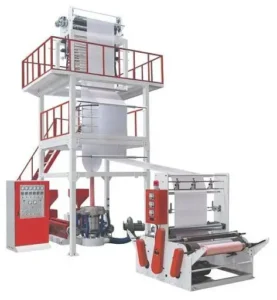
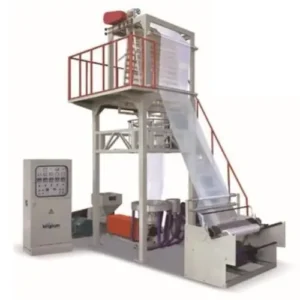
If your factory is dealing with persistent black spots, or you are considering a high-output co-extrusion bubble wrap machine with self-cleaning die designs and automatic screen changers built for tough schedules, our regional technical sales engineers would be glad to help.