Eliminating Static Charge Issues on Your Plastic Bag Making Machine in UAE Packaging Factories
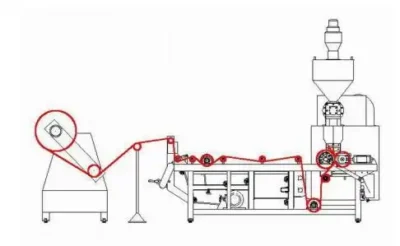
In the packaging industry across Dubai, Sharjah, and the wider UAE, throughput is what sets the monthly margin. Many factory managers hit a persistent bottleneck when a bag making machine runs at high speed: the friction of rapid film pulling builds static across the line. Even though coastal areas here are humid outside, the air inside an air-conditioned plant is dry, and the feeding and folding mechanisms generate a strong electrostatic field. The charge makes the film cling to the guide rollers, disrupts the feed, and throws off the stacking alignment of finished bags. On a high-output line that turns into stops, scrap, and operators chasing a problem that will not slow down.
Why a Dry, Air-Conditioned Hall Makes It Worse
When the machine unwinds and pulls HDPE, LDPE, or biodegradable film, friction against the rollers strips electrons from the surface. Without a path to earth, the charge sits on the film and on the metal frame. In a dry hall it has nowhere to bleed off, so it keeps building through the run and peaks as the film reaches the sealing and stacking end.
The symptom usually appears first as stacking trouble rather than as anything electrical: bags land slightly off, the pile leans, or a finished bag sticks to the tray and curls. That is the charge pulling the film toward whatever metal is nearest. Chasing the stack alignment without killing the charge just moves the problem a few stations upstream.
Give the Charge a Path to Earth — and Punch Holes in It
Start with a grounding audit, and expect to find faults. Machines often arrive with a single earth lead on the frame and nothing on the moving sections, and painted joints that look continuous can be electrically open. Run copper grounding wires from the unwind stand, the sealing station, the cutting deck and the delivery tray back to an independent earth rod, check continuity across frame joints with a meter, and clean paint or rust from the contact points before you bolt them down. Have a qualified electrician do the earth rod and measure the earth resistance — a poor or improvised ground defeats the whole exercise.
Grounding rarely clears it on its own at speed, so add active static eliminator bars (ionizer bars) along the film path. The most useful spots sit right before the film enters the sealing jaw and just after the hot cutting knife where bags are stacked, because that is where the charge does visible damage. Balanced positive and negative ions neutralize the surface charge quickly, and the film drops into the delivery tray without curling.
These bars need maintenance to keep working. Emitter pins collect dust and lose effectiveness quietly, and a dirty bar looks exactly like a bar that is switched off. Put pin cleaning on the weekly schedule, check the power supply and the indicator, and keep the recommended working distance from the film rather than moving the bar closer to compensate for wear. On a line that runs film fast, a compressed-air-assisted bar holds up better than a passive unit.
Starve It Before It Starts: Tension, Additives, and Air
Before touching hardware, it helps to know where the charge actually builds. A handheld static meter run along the film path will show you the peaks — usually at the unwind, after a tight nip, and at the folding plates — and that tells you which fix is worth the money. Without that reading, it is easy to spend on ionizers for a problem that is really a dragging roller.
Tension is the lever you can pull today. When film tension is too tight, friction against the rollers rises and so does the static voltage — it scales roughly with the tension. Calibrate the magnetic powder brakes and the tension sensors so the web stays taut without dragging, and set a taper at the rewind rather than holding full tension to the last meter. That alone cuts the charge before the film reaches the cutting deck.
The film itself is the other half. Plants running high shares of recycled resin without anti-static additives see charge build much faster at speed. If the formulation cannot change this month, keep anti-static masterbatch on the list for the next order — it is cheaper than a permanent ionizer installation.
Finally, work on the air. Outside the plant it is humid; inside an air-conditioned hall it is dry, and dry air lets charge sit on the film. A targeted humidifier or fine-mist nozzles near the unwinding stand lift local humidity into the 45–55% range, which is enough to make the film surface slightly conductive so charge bleeds away. Do not push it higher: over-humidifying brings condensation on chilled rollers, rust on the frame, and water marks on the film. Keep the nozzles clear of electrical cabinets, and make sure no mist reaches drives or control panels.
Grounding, ionization, tension, film formulation, and local humidity each carry part of the problem, and together they keep a high-speed line feeding and stacking cleanly through a UAE summer.
If your plant is fighting static cling, missed stacks, or scrap on the bag line, or you are comparing bag machines and static-control packages built for Gulf conditions, our technical team would be glad to review your setup.