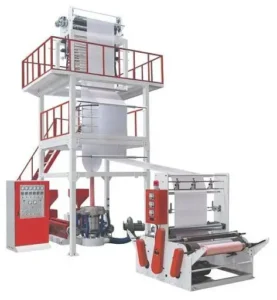
UAE Plastic Production Guide: How to Fix Blown Film Machine Gels and Fish Eyes
Running a high-output blown film machine in the UAE or broader Gulf region leaves no room for film quality compromises, especially when supplying lamination or heavy-duty packaging films to strict local clients. Among the most stubborn defects that haunt Middle Eastern factory floors is the sudden appearance of gels, unmelts, or fish eyes on the film surface. When these hard polymer specks show up, your film will snap during conversion, ruin your printing graphics, and cause immediate batch rejections from your customers. To protect your factory margins and cut waste, let us walk directly through the operational steps required to fix gels by cleaning your system, managing your screens, and isolating your raw materials.
Step-by-Step Guide: How to Fix Gels and Film Contamination
Start with a thorough purge. If the gels come from carbonized material that has degraded inside the machine, run a high-viscosity commercial purging compound through the extruder hopper at a moderate, steady screw speed. The idea is to scrub the screw flights and barrel walls where stagnant polymer has baked under constant heat — fresh resin alone rarely dislodges the stubborn carbon. If the specks survive the purge, the next step is a physical teardown: pull the die head apart, remove the mandrel and die lips, and clean off the degraded layer with copper gauze and brass tools. Die lips and mandrels are precision-finished surfaces, so work gently and stick to tools softer than the steel — a hard scrape can gouge the surface and ruin the head. Let the die cool enough to handle safely before you start, and if you are not comfortable with the disassembly, call the machine supplier rather than forcing it.
Then look at the filtration. Fish eyes and unmelts — hard, lens-shaped specks of plastic that never fully melted — are a different problem from gels: they point to poor plasticization upstream rather than degradation. On a scheduled stop, change the screen pack, moving from a standard coarse mesh to a denser, multi-layer setup (for example 20/40/80/100/20). The denser screens trap the unmelted material and contaminants before the melt reaches the die; they are a filtering step, not a way to make the polymer shear or plasticize better. Watch the pressure transducers while you do this — a denser pack raises head pressure, so keep it inside the safe range for your line rather than chasing maximum filtration.
If contamination is coming from the environment or material handling, the feeding system is the place to check. Clean the hoppers, vacuum loaders, and conveying pipes so no cross-contamination slips through — a small trace of high-molecular-weight HDPE mixed into an LLDPE batch can leave unmelted lenses all through the film. In the dusty, sandy conditions common around the Gulf, make sure the vacuum loading system uses closed-loop filters rated for fine dust (fractional micron ratings on the feed line), so silica does not get pulled into the feed throat.
Process Troubleshooting Matrix for Gel Elimination
Use this practical, quick-action reference guide to apply direct mechanical and thermal remedies directly on your factory floor.
| Blown Film Machine Gel Defect |
Direct Fixes & Process Remedies |
Immediate Operational Action |
| Black or Carbonized Degradation Specks |
Run a heavy scrubbing purge compound or execute a manual screw and die teardown. |
Scrub internal flow channels with brass tools to remove baked polymer buildup. |
| Clear, Lens-Shaped Unmelts (Fish Eyes) |
Increase backpressure by upgrading to a finer, multi-layered mesh screen pack setup. |
Replace old filters with a dense mesh combination to trap un-plasticized material. |
| Cross-Contamination Streaks |
Purge the entire feeding system and check regrind blending ratios carefully. |
Flush hoppers and vacuum loaders to remove foreign resin or external dust traces. |
| Localized, Constant Gel Lines |
Clean the specific die lip zone or check for scratches on the internal mandrel surface. |
Inspect die lips for stagnation points and polish out any physical steel defects. |
Pro-Tips for Maintaining Long-Term Melt Purity
For long-term film quality, build a maintenance window into the weekly schedule. A useful habit before a long shutdown is to drop the barrel zone temperatures well below operating levels — for most LLDPE lines that means something like 40–60°C below setpoint — rather than leaving resin cooked at full temperature overnight. If you skip this, the polymer that stays hot in the barrel degrades and shows up as a fresh crop of carbonized gels when you restart. The exact drop depends on your resin and machine, so check the supplier’s recommendation rather than taking a fixed number.
If you want to cut the time spent on manual filter changes, a continuous hydraulic screen changer is worth considering: operators can swap clogged filter packs on the fly without stopping the melt flow or losing line tension, which keeps clarity consistent and avoids the downtime of a full stop. It is a hardware investment rather than an overnight fix, but on lines that change screens often it tends to pay for itself.
Upgrade Your Factory with a Precision Blown Film Machine
Our blown film machines are built around optimized screw geometries and high-efficiency mixing zones, aimed at good polymer homogenization without thermal degradation. Chrome-plated melt channels, hydraulic filtration, and sealed material delivery help the line turn out clear, low-gel film even under the high ambient temperatures common in the region.
If you are looking to bring fish eyes under control, cut your scrap rate, and invest in a heavy-duty co-extrusion blown film machine built for the Middle East market, our technical engineering team would be glad to discuss a setup tailored to your line. Contact us for a custom machinery consultation.